01 Descent
Approach
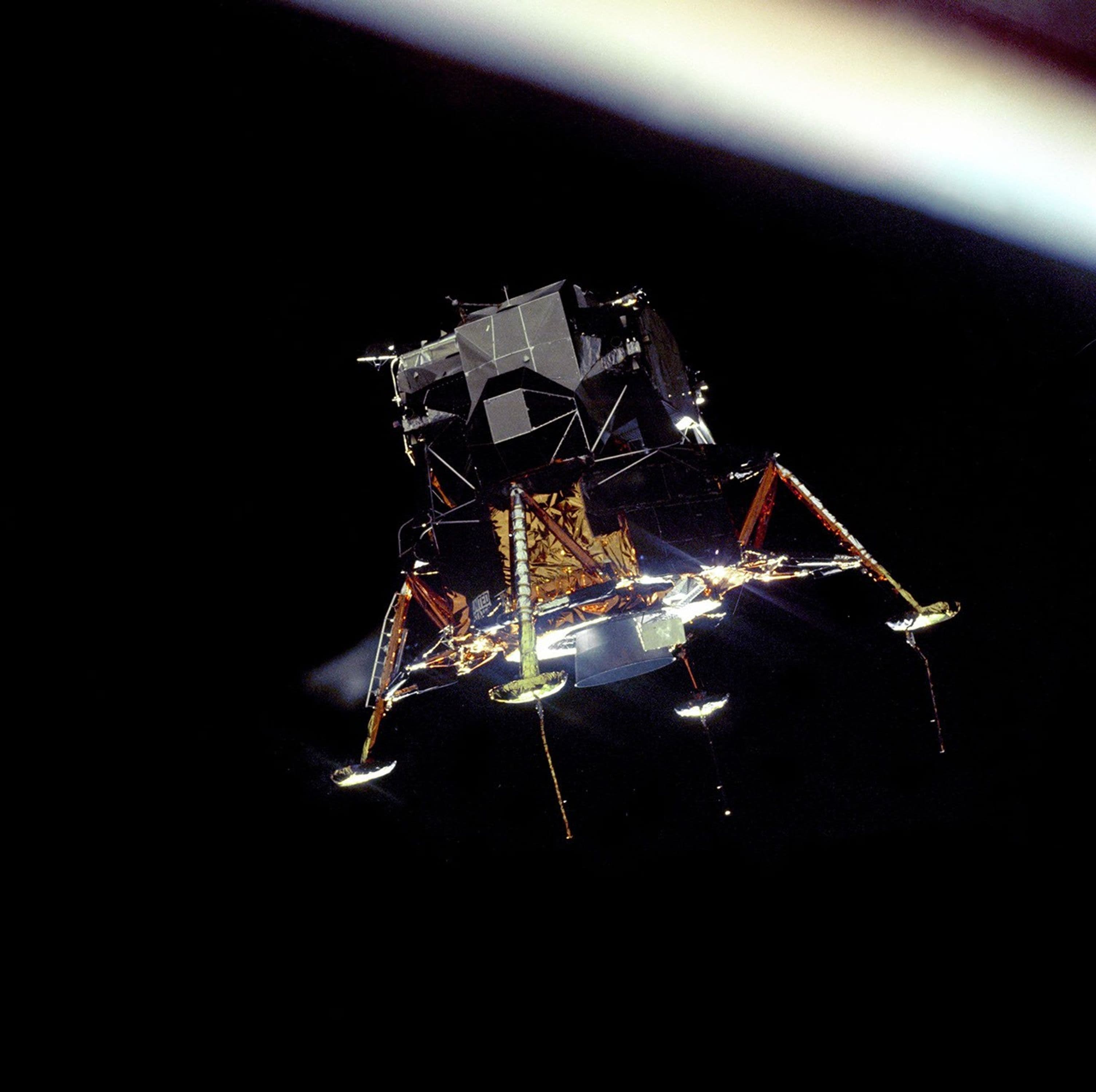
The descent engine ignites. For the next twelve minutes, the lunar module falls toward the surface under computer control.
- MET
- 102:33:05
- Altitude
- 49,971 ft
- Fuel
- ≈13:20
Loupe / Museum catalog
Gathering exhibitions and their discovery details.
Apollo 11 · Powered descent
Seven minutes before Apollo 11 landed, its guidance computer flashed an alarm the crew had never seen in training. This is the thirteen minutes between ignition and touchdown, told through the numbers the room was watching.
The last minutes of Apollo 11's descent, told as a systems story
Enter the descentJuly 20, 1969
Sea of Tranquility
102 hours into mission
Before the clock starts
On July 20, 1969, the Apollo 11 lunar module Eagle began its final descent to the Moon's surface. Everything from here on is real: the mission clock, the altitude, the fuel remaining, and the words said in the room. Scroll to follow the descent.
 Preparing descent
Approach
01 / 0601 Descent
The descent engine ignites. For the next twelve minutes, the lunar module falls toward the surface under computer control.
02 Descent
Armstrong's landmark checks show Eagle is running long — several miles beyond the planned target. The descent is precise. The position is not.
We're going to land long.
03 Descent
Neil Armstrong calls out a 1202. The guidance computer is overloaded — and nobody aboard Eagle knows yet whether that is fatal to the landing.
Program alarm. It's a 1202.
04 Descent
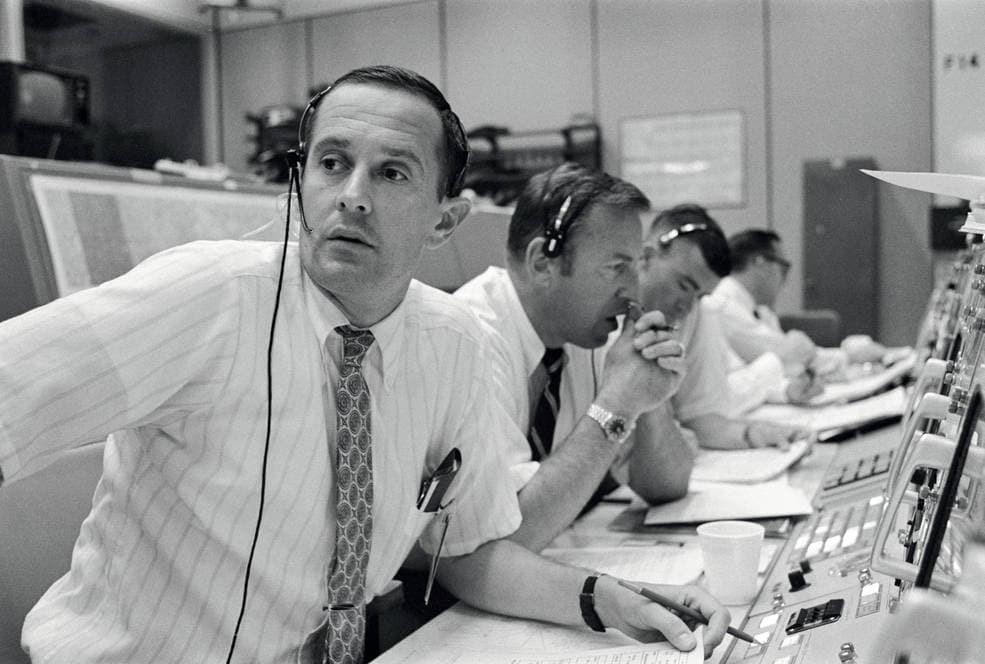
A 26-year-old guidance officer in Houston has twenty-seven seconds from the first alarm call to the answer. The computer is restarting critical jobs and leaving lower-priority work behind.
We're Go on that alarm.
05 Descent
Armstrong selects the manual landing program, flying by eye over West Crater's boulder field while the computer continues controlling the engine's descent rate.
06 Descent
Engine off. Postflight analysis found about forty-five seconds of hover time remained — more than it felt like in the room, and still close enough to matter.
The Eagle has landed.
Beat 1 of 6: Approach
What survived the alarm
Overload ≠ failure
Priority became survival
The computer didn't fail because it overloaded. It was built to drop what mattered least and keep what mattered most — which is exactly why it landed on the Moon that day, and why 'graceful degradation' still describes good systems design today.
Mission time and event altitudes are checked against NASA's Apollo 11 records. Approximate firing-time values are marked ≈; they are inferred from the elapsed descent and NASA's postflight 45-second touchdown margin, not direct cockpit readouts.